Co-Design of Robotic Street Furniture
2025 – 2026
This project explores how robotic street furniture might foster meaningful social encounters among adolescents in urban public spaces. While young people rely on public space for peer bonding and identity work, they are rarely involved in shaping these environments. At the same time, many encounters have shifted into digital spaces, where interaction is filtered rather than embodied and spontaneous.
Commissioned by the Honda Research Institute EU, the project asked whether robots — due to their physical presence and particular social qualities — could scaffold human–human interaction in public space.
I led the theater-based co-design process with fourteen adolescents in collaboration with my colleagues of the University of Siegen, the Forum Freies Theater Düsseldorf and artist Norman Grotegut.
Through speculative enactments, participants developed and performed ten concepts for robotic street furniture, such as roaming benches that orchestrate coincidences.
Across these concepts, adolescents imagined robots in roles such as icebreaker or scapegoat and attributed to them specific “robotic superpowers,” including persistence, perceived objectivity, and non-judgment. These insights were condensed into eight design suggestions for socially facilitative robotic infrastructure.
The resulting CHI paper argues that robots may support adolescent encounters not despite their machinic nature, but precisely because of it — contributing to research on social technology and public space.
Cooperation:
Honda Research Institute Europe GmbH,
Forum Freies Theater (FFT) Düsseldorf (Alice Ferl, Alba Anulika Okoye), Norman Grotegut
Corresponding Publication:
J. Dörrenbächer, T. V. Pham, T. H. Weisswange, A. Uhde, A. Hoch, M. Hassenzahl: »Mediating Urban Social Encounters – Co-Design of Robotic Street Furniture with Adolescents«. Proceedings of the Conference on Human Factors in Computing Systems (CHI ’26), ACM 2026.
Pictures:
Images: University of Siegen

An exemplary prompt set for one enactment, including a prompt card, ›prostheses‹ used to embody the robot drawing on the method of Techno-Mimesis, and a robot profile used for reflection.
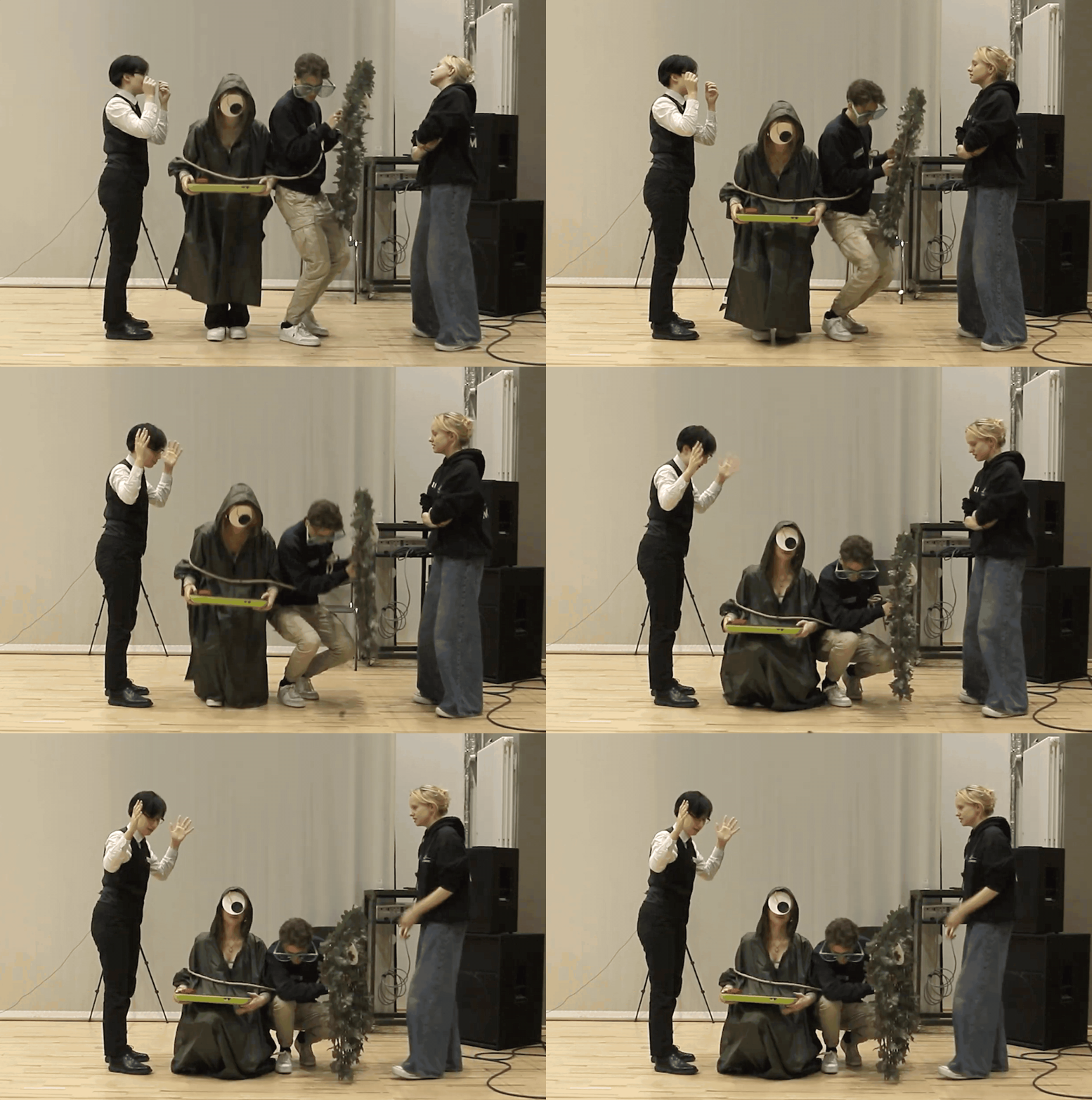
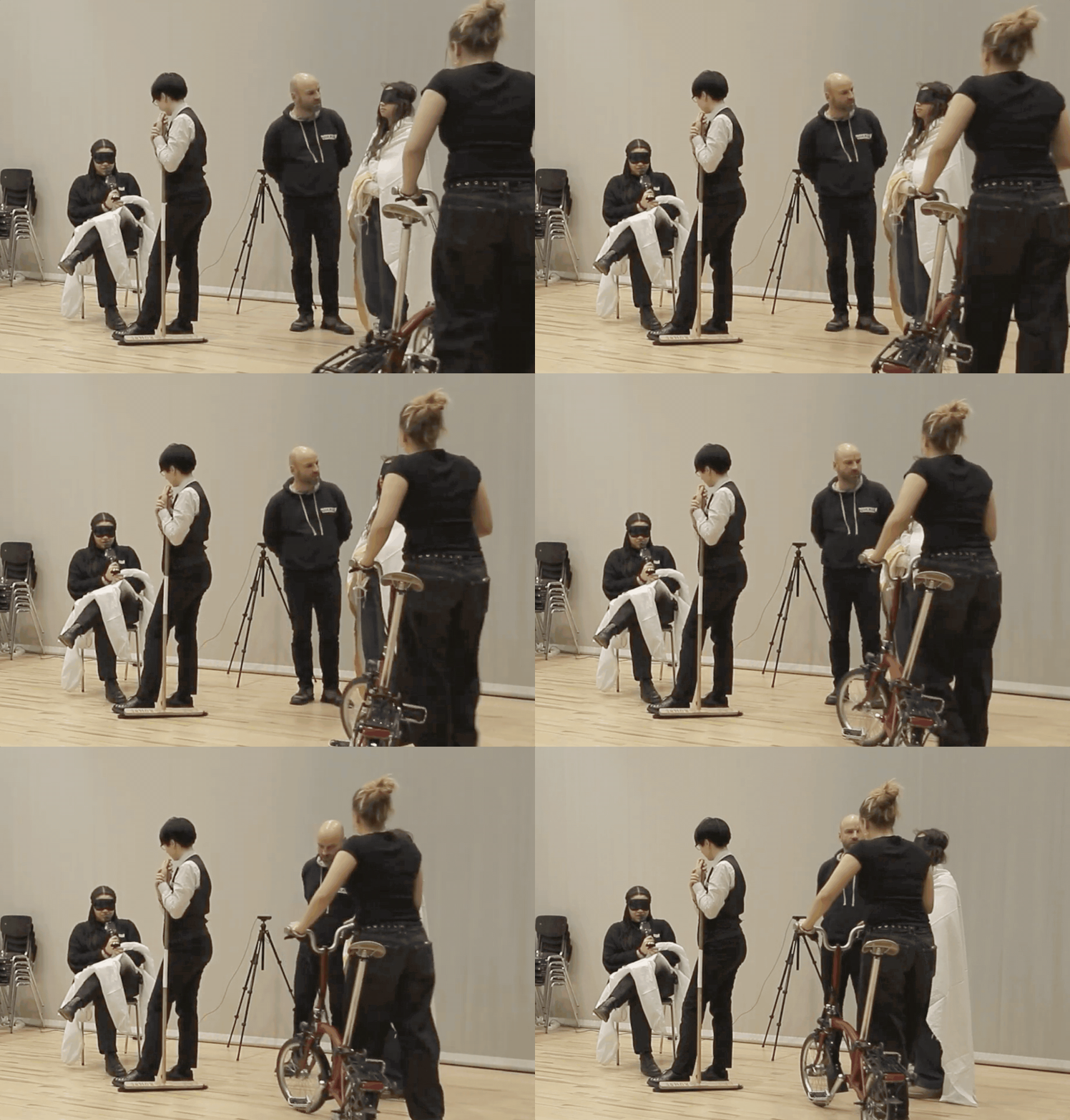
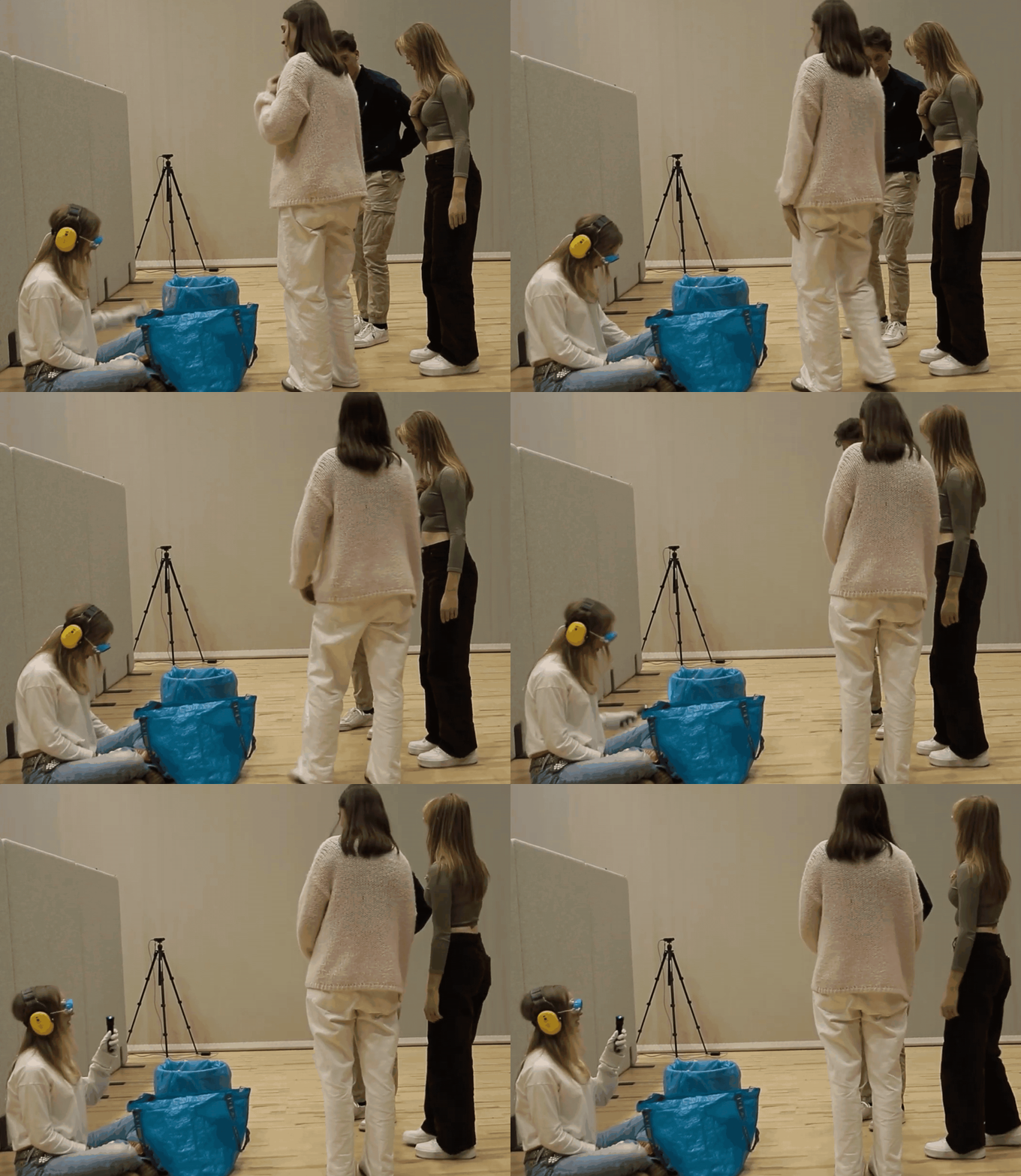

Adolescents enacted ten concepts for robotic street furniture — including blind seating blocks encouraging self-reflection and bike racks coordinating shared rides. From these concepts, we derived eight design suggestions.